
Local and Sustainable
TRADITIONAL NORWEGIAN FOOD
At Fosen Folk School we have a great respect for the food we produce and eat.
We want the food we serve to be as sustainable as possible, without it getting too expencive for our students. We do that by serving a combination of organic produce and meat from our own farm, non-organic food bought from a wholesaler, and food bought from local producers.
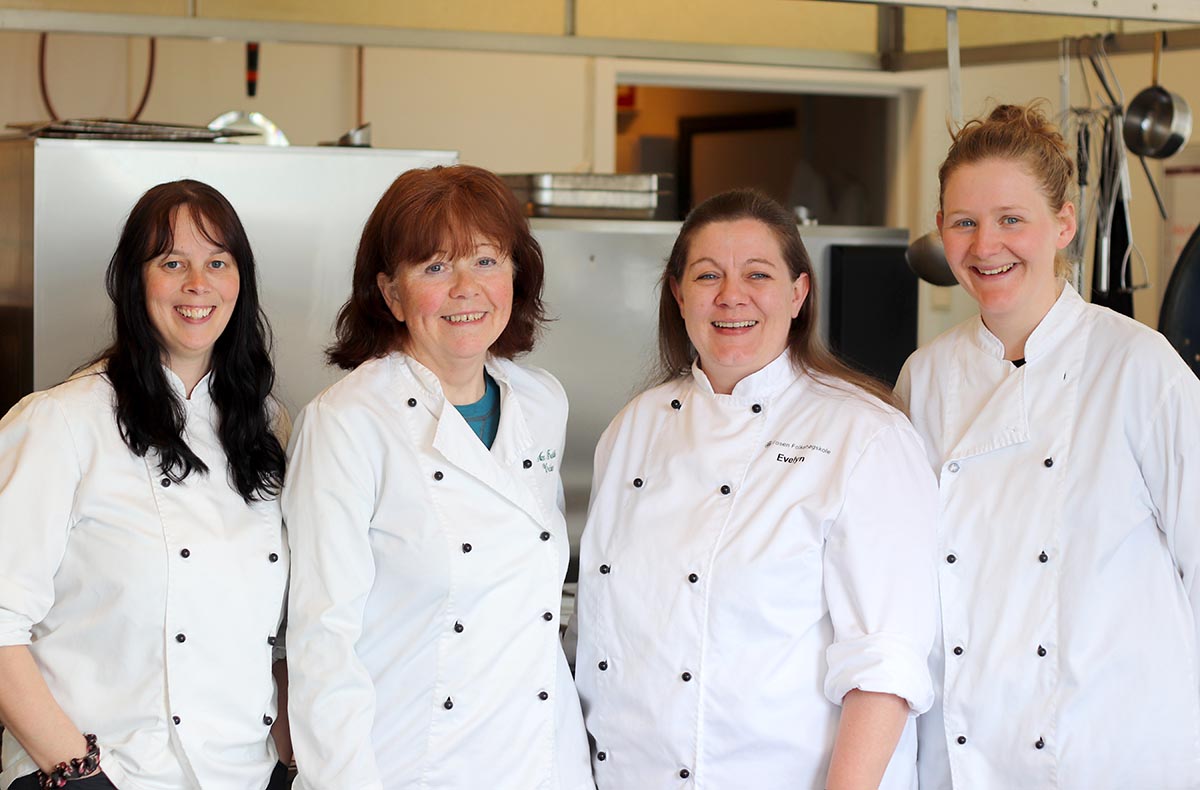
We cook from scratch as much as possible. That is quite the challenge when cooking for 70 students each day, but our wonderful kitchen staff work hard to ensure you get healthy, good, local and sustainable food on the table - every day.
Traditional Norwegian Cuisine
The food served at Fosen Folk School is based on traditional norwegian food. We have bread for breakfast, lunch and a light evening meal, with dinner being the only hot meal of the day. You will often make a lunch box of sandwiches at breakfast, to take wherever you go that day - out sailing, farming or hiking.
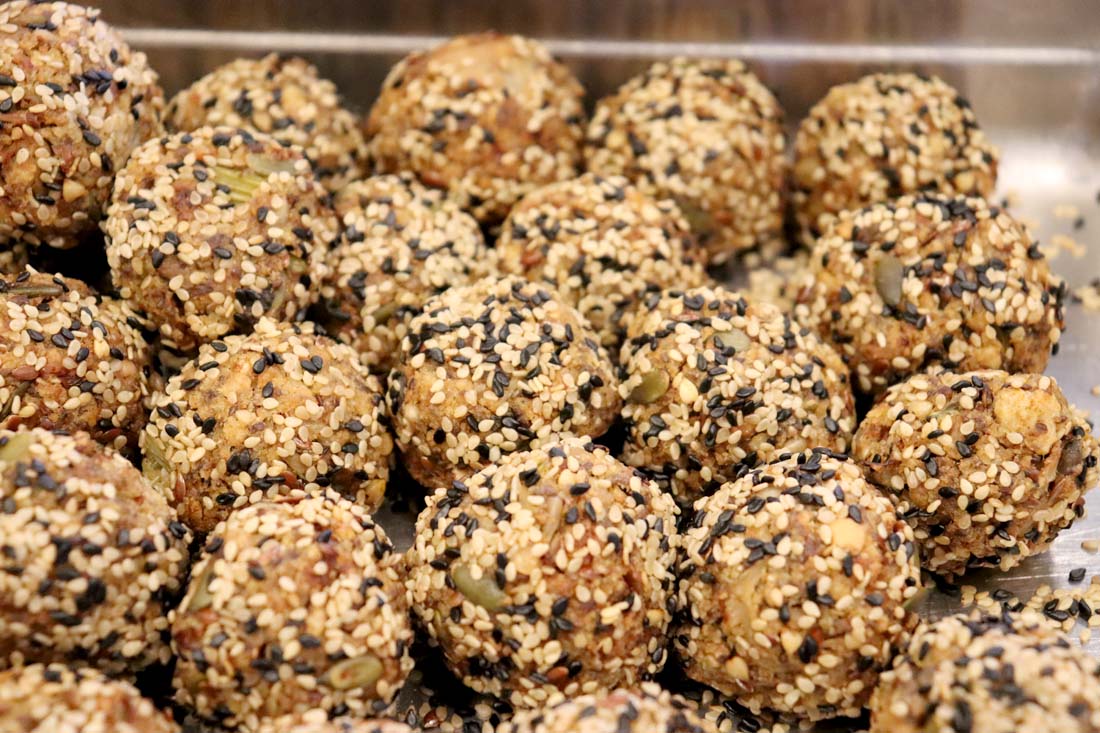
We bake our own bread, and make a lot of the spreads ourselves. egg salad, lentil pate, peanut butter, chocolate spread and humuses are among the classics.
Classic norwegian dinners often consists of fish or meat, potatoes, and root vegetables.
Self-sufficiency
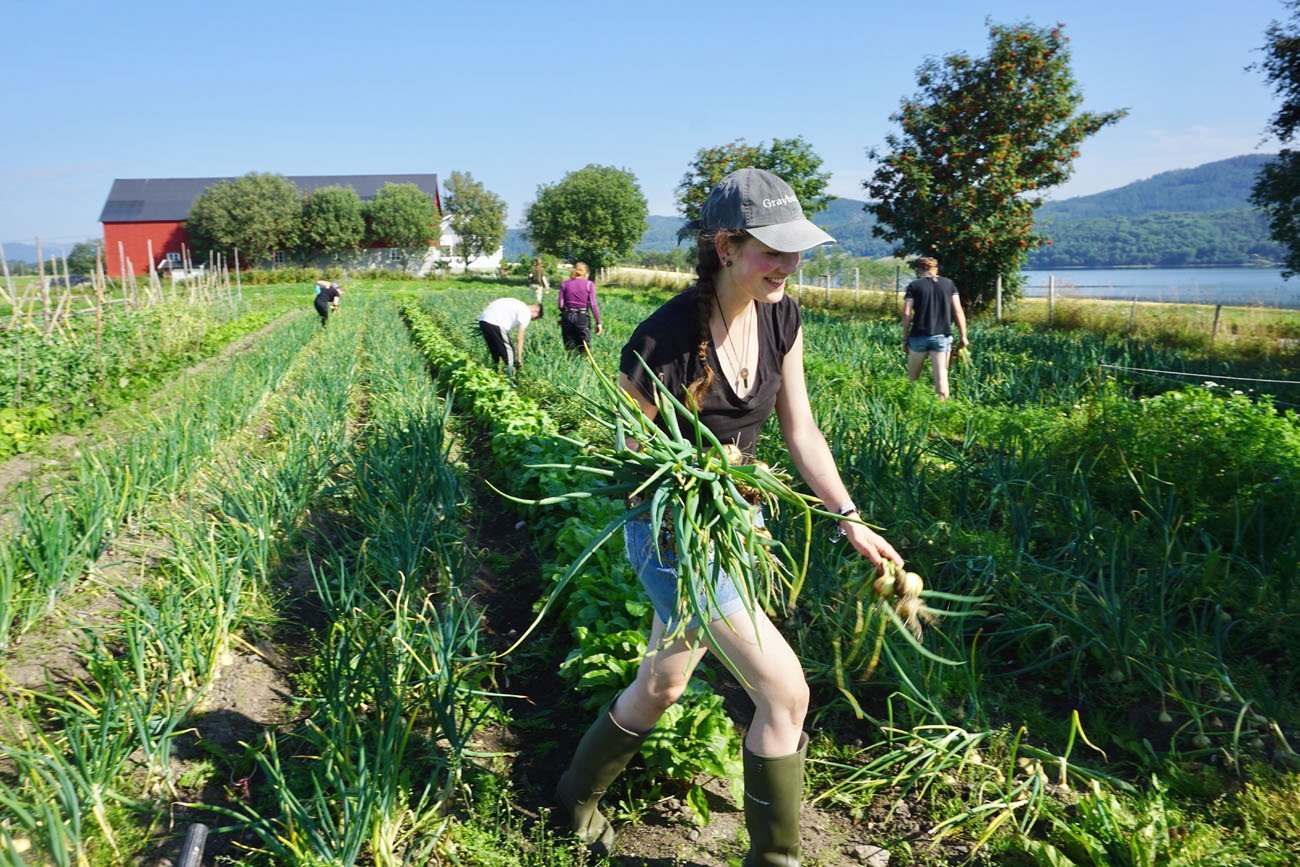
We are definitely not self sufficient in food, but we want to be as self-sufficient as possible when it comes to vegetables, fruit, eggs, berries, and meat. As a student you will also be able to contribute: together we can harvest five tons of potatoes in one day. We’ll pick berries and fruit, and harvest vegetables which we’ll eat throughout the winter.
Seasonal vegetables
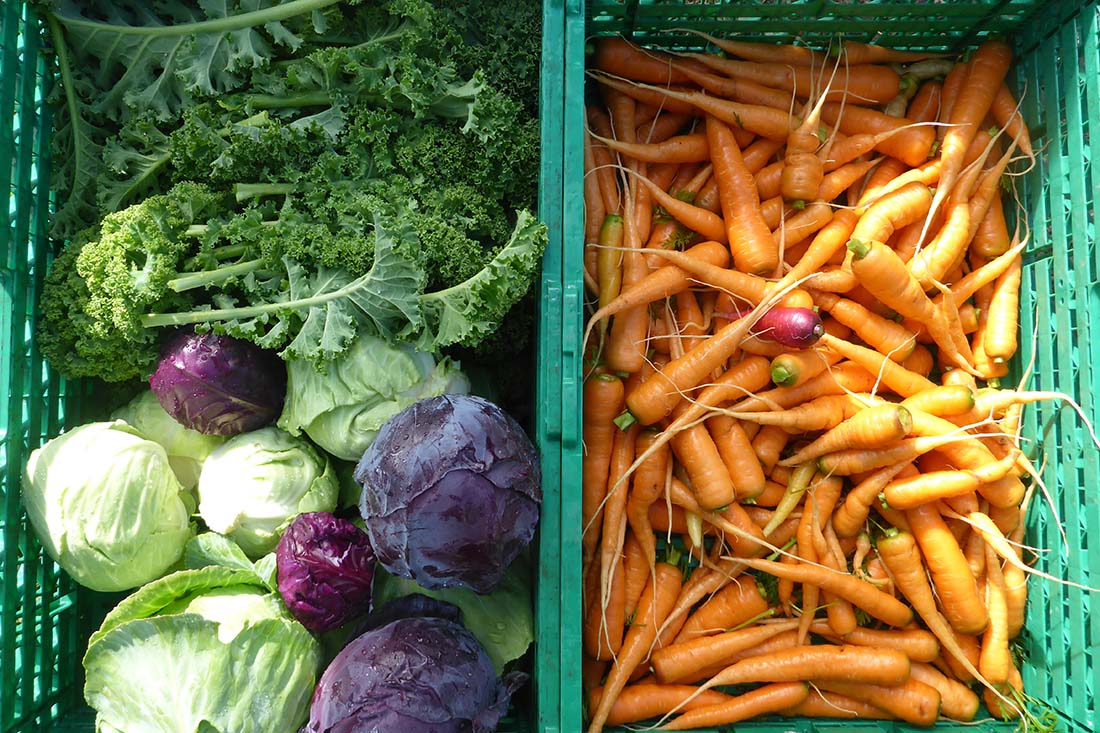
An important part of being self-sustained is eating whatever is in season. The food served follows the rythm of the year, and our kitcken staff cooks what the farm has to offer at any given time. In the fall, we have different leafy greans, fresh onions, and a variety of brassicas: kale, cabbage, broccoli, turnips, etc. During winter, we eat what stores well in our root cellar: carrots, turnips, beetroot and potatoes.
Food Preparation
Our well-trained kitchen staff work all year to serve you varied, delicious, and nutritious food. Here most of our food is made from scratch, with great respect for the ingredients.
They’ll slaughter the animal, whether it lamb, moose, or pig, and part it, make ground meat and from that make sausages, and meatballs, as well as salt the meat, smoke it, and boil stock.
When the local fisherman comes with 70 kg of fish they’ll filet it, and make fish cakes, soups, and other fish dishes.
They’ll make cordials, jams, muesli and yoghurt, and much much more.
Award-winning Kitchen
Here you’ll get, amongst other things, freshly baked bread with homemade toppings such as hummus, egg salad, peanut butter, chocolate spread, lentil pates, apple jam, and liver pate, along with non-homemade toppings, like salami and cheese.
Our kitchen won the Debio-award in 2018 for our outstanding use of organic and local ingredients in our food production.
Vegetarian option
You have the option to choose a vegetarian diet, at no extra cost. Just let us know!
Allergies, intolerances and other special dietary needs
If you have any allergies or intolerances or other special needs that you need us to cater to, we can do so against a small extra fee. You can find info on the current fee here. The fee covers additional cost for buing special ingredients, as well as some of the additional work for the kitchen staff. The rest of the cost for the additional work is covered by the school.
On overnight trips, you will be expected to contribute with regards to your diet, to make sure your needs are met.
Please notify our kitchen staff at [email protected] if you would like vegetarian food, or if you have allergies or intolerances that you would like us to accomodate.
Our Farm
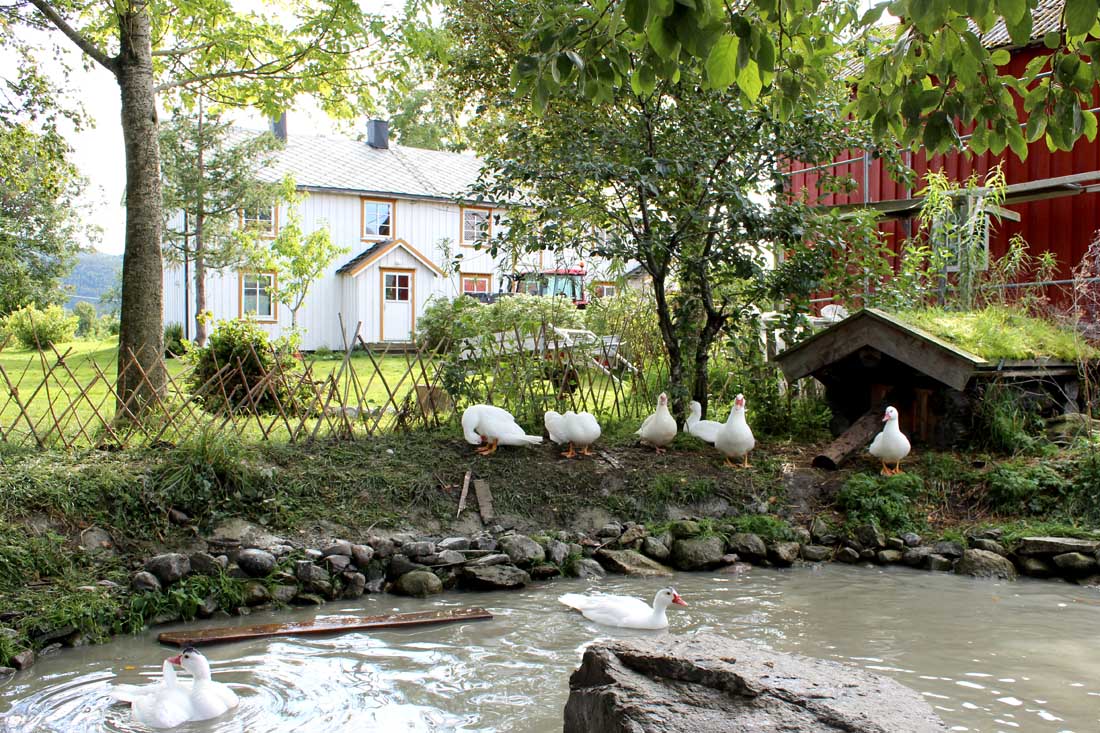
Our farm, Nøst, is an important part of the school. The farm is organic, and certified of Debio, Norway’s organic certification body. Here we raise pigs, cows, hens, ducks, and two cats.
The farm is 64 decares, about the size of eight soccer- (football) fields. On the land we own we cultivate hay for animal food, and vegetables for the school. The selection varies a little from year to year dependant on what the kitchen needs and what the students (that’s you) want.
Nøst is about 2.5 km from the school, a short bike ride away.
Everyone Contributes
The farm is run by Emma, who works at the farm full time, the teacher, Anton, and the Organic farming class. Most years we also have a farmhand that helps out.
In addition the whole school works together on the farm for a week. And if you want to work more on the farm then you can sign up to volunteer to help at the farm throughout the year.

Our Animals
Our cows belong to a breed with a long history in Norway called “Sidet Trønder.” They’re typical for this area with characteristic black and white spots on their backs and bellies.
The hens hop around in the free air, the wool-pigs root in the ground there and the ducks quack around the farm as they so please.
Self-sufficient with feed and fertilizer
We have a goal to be as self-sufficient as possible when it comes to animal feed, and we take care to gather all the fertilizer our farm produces to use on the fields next year.
Seter (mountain farm)
Our school has a satellite farm in the hills with its own woods around where we can harvest timber in the winter and put our cows to pasture in the summer.
We also have a flock of old Norwegian sheep on an island further out on the coast.
