


SHORT COURSE SUMMER 2027
Crafts & Primitive Living
July 11th - 17th 2027
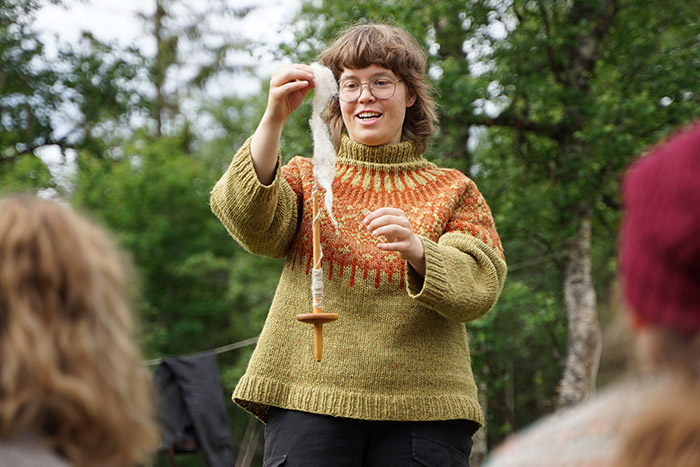
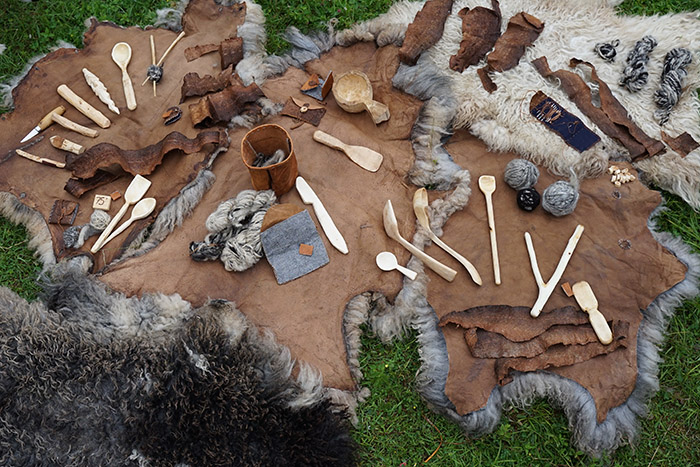
Join us as we head to our highland pasture for a week of back-to-basic crafts in a rustic setting. We will do basic green woodworking, with wood we get from the forest ourselves. Learn how to tan fish skins and do a small skin sewing project. Spin yarn using a simple drop spindle, perhaps do some plant dying? The evenings will be spent by the fire whittling, singing and telling stories.
Sign up by email to [email protected] by May 1st.
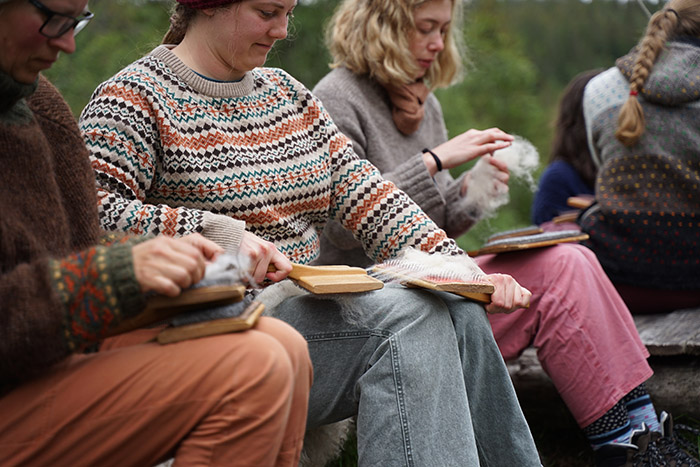
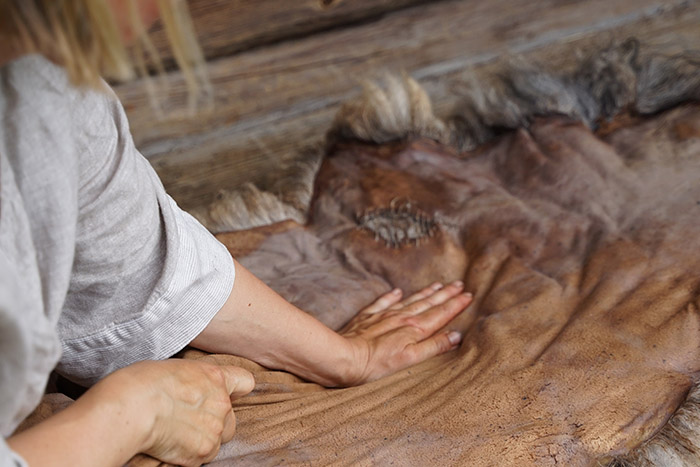
Crafts will include green woodwork, hand processing and spinning wool, bushcrafts and primitive skills, fish skin tanning and skin sewing. A week goes by quickly, and you will not have time to immerse yourself fully in each craft, so you will have to prioritize the crafts you find most interesting.
Quick details
Dates: July 11th (arrival before 4pm)- 17th (goodbye at 1pm)
Spots available: 12
Instructors: Ellen Winther Klim and Sander Vandenborre
Language: Instructors are international, and will adapt language to the group. But the main languages will be English and Scandinavian.
Price: NOK 8 500,-. This includes food, lodging, craft materials, a carving knife and the course itself. Registration fee (2000,-) is included. Transportation is not included.
Sign up: email [email protected] by May 1st.

Rough plan for the week
(Changes will occur)
Day 1 (11th): After arriving and settling in, we eat dinner together and start the fishskinn tanning.
Day 2 (12th): We pack up our stuff and go to our highland pasture, Lefætten. This is a short drive and about a 1 hour hike, mostly uphill. Set up camp, learn how to make cooking fires. Familiarize ourselves with the surrounding area and gather materials for our crafts.
Day 3 (13th): Green woodwork. We will learn the basic principles of working with the knife and axe, and start some simple projects.
Day 4 (14th): Wool day. We learn how to prepare and spin yarn. We will also begin softening our fishskins.
Day 5 (15th): Tanning and sewing day. We finish our fishskins, learn basic skin sewing, and start a small sewing project. We will also learn how to sharpen knives and tools.
Day 6 (16th): An open day to continue with your projects, or walk in the landscape surrounding the cabin. We will be there to help out with whatever the day brings. And of course, we end with a festive meal to celebrate our week together.
Day 7 (17th): Pack up and go home. Usually we are at school before 12, so you have a bit of time to shower and unpack. We will also help drive to the bus.
Food and lodging
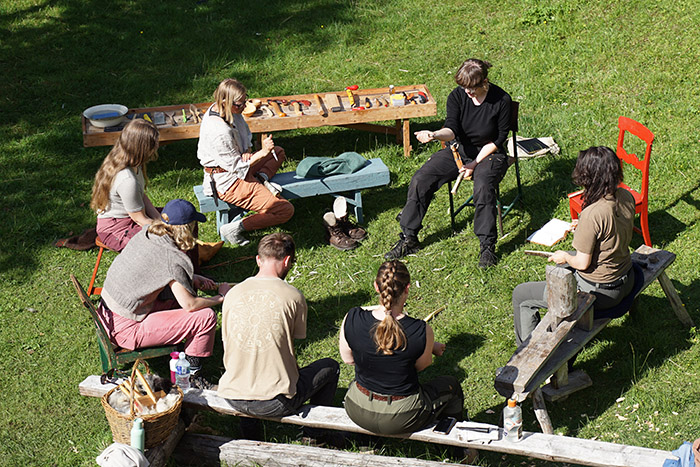
The first night we will stay at the folk school’s dorm. Days 2-7 we will stay at the school´s highland pasture, where there is a rustic cabin. The cabin has no electricity or running water. But not to be worried - it's still super cozy and quite comfortable! We will cook on the wood stove in the cabin, or on the fireplace outside. There is a well for collecting water, and a traditional outhouse toilet with a pit latrine.
We will take turns cooking for the group, with everyone contributing. If you have any food allergies etc, you will be expected to be more involved in the cooking to make sure that your dietary needs are being met. We will of course help out!
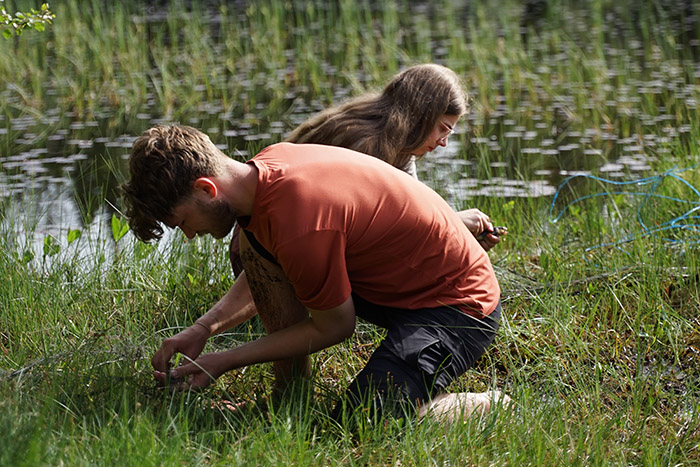
Course instructors: Ellen and Sander
Ellen Winther Klim
Ellen is a lively and energetic Dane who has a big interest in all things traditional handcraft. She spends as much time as she can spinning yarn, sewing, carving spoons and tanning hides.
She spent two years at Fosen Folkehøgskole, first as a student in the textiles and traditional handcrafts class and later as teachers assistant in the self sufficiency class. Back in Denmark she has volunteered and worked at an open air museum. She has travelled a lot around Scandinavia, discovering new beautiful places, crafts and people.
Ellen is currently getting her bachelors degree in folk art and traditional crafts, deep diving into many different traditional techniques and objects. This year she's also taking an additional course in folk costume history.

Sander Vandenborre
Sander spent two years building traditional wooden boats here at Fosen, first as a student and later as teacher's assistant. He has a background in product design and takes a huge interest in traditional crafts. Most evenings you’ll find him working in his workshop making all things wood or forging his own tools.
At the moment he is working for a window company where he restores traditional sash windows.
Sander has a good eye for aesthetics and detail. His biggest interests are woodwork and bushcraft, and he looks very much forward to sharing his knowledge!
Who is this course for?
This course is for anyone wanting to spend a week living communally in the Norwegian woods, learning primitive skills such as green sloyd woodworking, wool crafts, and fish skin tanning. The course is targeted towards beginners looking for a taste of primitive crafts, but more experienced crafters are also very welcome.
Our targeted audience is about 18-70 years old. There could be a possibility to bring your child however the course is targeted to adults, so please talk to us if considering signing your child up.

Price
Price: NOK 8 500,-
This includes food (we all cook together), lodging, craft materials, a carving knife, and the course itself.
Transportation is not included.
The price includes a registration fee of NOK 2000,- to be paid in advance. You will recieve payment information upon signing up for the course. The remaining NOK 6 500,- are due in June.
What do we expect of you?
We expect you to be curious and open, and to take initiative to learn. We also expect all participants to help out in the daily practical tasks such as taking turns cooking for the group, keeping the fire going, carrying water from the well, etc.
You must be able to hike to our highland pasture (about a one hour, medium strenuous hike), and comfortable staying there without running water or electricity.
Signing up
You can sign up for this course by emailing [email protected] by May 1st.
What do you need to bring?
- A sleeping bag (It can get cold during the night, so comfort temperature should be 8°C or lower)
- If you have a good sleeping mat, bring it at well. There are some matresses in the cabin, but not enough for everyone.
- Warm clothes, preferably wool. The Norwegian summer is not always warm.
- Wind- and waterproof outer layer
- Hiking boots, waterproof
- A big backpack for carrying your stuff and common equipment to Lefætten.
- Washcloth for personal hygiene. At the school there are showers, but at the cabin there is no shower and nowhere to swim
Other useful, but not essential gear:
- A small woodworking axe
- Sleeping mat if you prefer sleeping outside
- Tent / hammock and tarp
- An all purpose outdoor knife if you have (you will get a carving knife for woodworking)

How to get here
Trondheim is the closest major city. From there, you can travel by boat and bus. Connections are not frequent, so we recommend looking up the transportation to Rissa before booking your tickets to Trondheim.
If you have any questions, do not hesitate to contact us!
Course instructors:
Ellen Winther Klim
phone number: 0045 30255541
Sander Vandenborre
phone number: +47 986 20 357
